
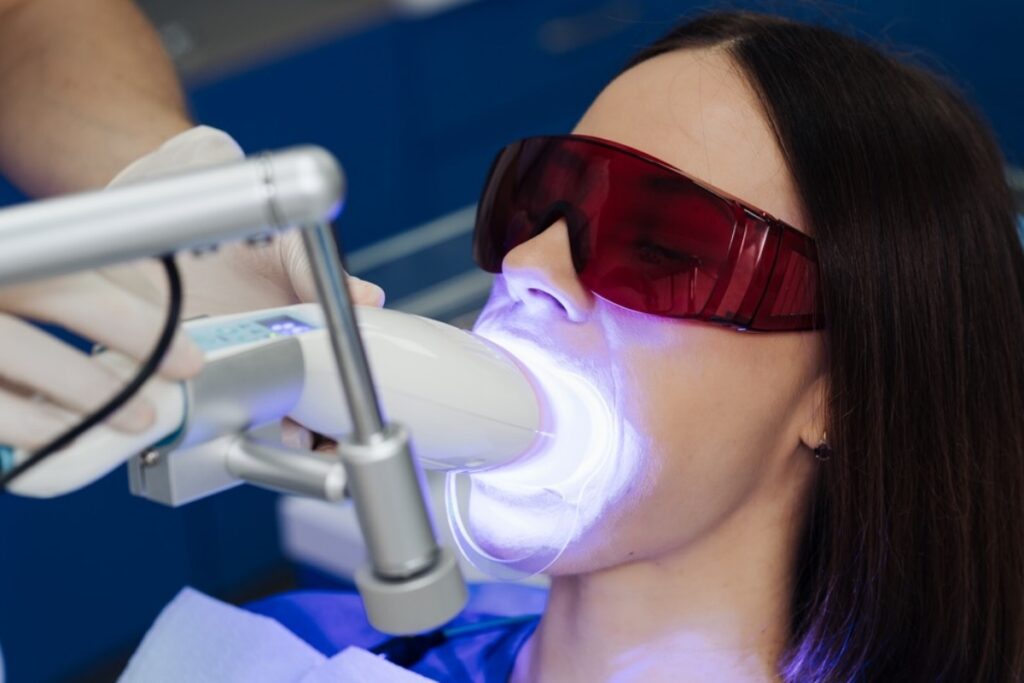
Discolorations occur on teeth due to the consumption of tea, coffee, cigarettes, and various colored foods. Such stains can be removed through dental cleaning procedures. In addition to these, aging, root canal treatments, antibiotics used during childhood (such as tetracycline), and various systemic diseases can also cause discolorations on the tooth surface. The process of removing all these stains by applying specific whitening materials to the tooth surfaces under the supervision of a dentist is called whitening or bleaching. The degree of whitening depends on the person’s natural tooth color. With this procedure, teeth can become at least three to four shades lighter. There are two types of whitening applications: home-type and office-type.
Home teeth whitening is a procedure performed by the patient at home using special whitening products prescribed by the dentist. Home whitening generally includes the following steps:
When applied regularly and according to the dentist’s instructions, home teeth whitening can yield effective results. However, this treatment may not be suitable for everyone and should be evaluated by a dentist.
Office teeth whitening is a professional procedure performed by a dentist in a clinical setting. It generally includes the following steps:
Office teeth whitening provides faster and more effective results. It is safe since it is performed with professional equipment by an experienced dentist. However, it may not be suitable for everyone and should be assessed by a dental professional. To maintain long-lasting results, proper dental hygiene and regular care are essential.
The duration of teeth whitening treatment and how long the results last depend on several factors:
After whitening, teeth generally appear brighter immediately. However, how long the results last depends on personal habits and diet. Teeth may gradually return to their previous color if habits such as smoking, coffee or tea consumption, or poor oral hygiene continue.
Teeth whitening is generally painless, but some patients may experience mild sensitivity or discomfort during treatment. This sensitivity is temporary and usually subsides within a few days.
There are concerns that the chemicals used in whitening could harm tooth enamel. However, professional teeth whitening, when done under dental supervision, does not damage the enamel. Especially in office-based whitening, the dentist takes special precautions to protect the enamel.
In conclusion, when performed correctly, teeth whitening is generally safe and comfortable. However, if you have concerns or existing dental problems, it’s important to consult your dentist. Your dentist will determine the most suitable treatment options and guide you through the process.
Post-treatment care is crucial to maintain long-lasting whitening results. Here are some important points to consider after teeth whitening:
Please fill out the form below, and our team will contact you shortly.
With our experienced team, we are here for you to achieve healthy and beautiful smiles.
We add value to your smiles with over 20 years of experience and a modern approach.
The satisfaction of thousands of our patients is our greatest achievement.
At our clinic, we offer you the most up-to-date treatment methods with our physicians, each of whom is an expert in their field. We are here to help you achieve a healthy and aesthetic smile with our experience, care, and modern technology.

Dentist

Dentist

Please fill out the form below, and our team will contact you shortly.